
Key Questions to Ask When Selecting Your Bay Area Hair Transplant Specialist
When your hairline changes, you may worry that you’ll lose part of yourself along with it. In moments like these, you deserve more than the first billboard you see promising quick solutions. You need a specialist who understands the emotional weight of hair restoration and has the skill to restore your confidence and appearance by providing natural-looking results.
The Bay Area offers many options, but not all clinics provide the same level of expertise, technology or results. Researching what to ask a hair restoration doctor before committing to a specific treatment plan will ensure your long-term satisfaction.
Procedures and Treatment Options
Hair transplants are not one-size-fits-all. Choosing a clinic that offers a menu of treatment options matters as much as selecting a specialist. Here’s what to find out during your initial consultation.
What Hair Transplant Procedures Do You Offer?
A quality Bay Area hair transplant clinic should offer multiple techniques so you can find an approach that fits your specific hair loss pattern, donor density and goals. Having several options lets your specialist choose the most efficient method while minimizing scarring.
- ARTAS® robotic hair transplant: This approach fuses surgeon artistry with robotic technology and is FDA-approved for men with male pattern baldness who have straight black or brown hair.
- NeoGraft: Suitable for various hair types, NeoGraft is a minimally invasive option that extracts hair from the donor area using suction.
- Follicular unit transplantation strip method: This treatment often yields the most grafts, which is beneficial for patients with more advanced hair loss.
Do You Offer Customized Treatment?
A surgeon should tailor hair transplant treatment to your individual characteristics. For the best hair transplant in the Bay Area, look for a clinic that emphasizes a collaborative philosophy.
Your facial structure is unique, requiring a custom hairline design appropriate for your age and face shape. During the initial consultation, your specialist should assess the amount of donor hair you have and determine how to effectively cover thinning spots. Surgeons should also plan for future hair loss so your outcome keeps pace with the progression of pattern balding over the years.
Experience and Credentials
Establishing a relationship with a skilled and experienced medical professional is essential for achieving long-lasting results you can take pride in. Get detailed answers to the following questions before committing to a specific treatment.
Who Will Perform the Procedure?
A licensed physician should perform your hair restoration surgery. The Medical Board of California imposes strict regulations, which include requiring licensed physicians to perform all hair restoration surgeries to maintain patient safety and achieve optimal results. Physician assistants and nurse practitioners may assist, but only under direct physician supervision.
What Credentials Should a Surgeon Have?
Choose a board-certified physician who has years of experience performing hair transplants. The best hair transplant specialists in the Bay Area have extensive training in advanced techniques that deliver seamless results while minimizing scarring.
The Hair Restoration Center’s board-certified dermatologist, Dr. Aaron Chen, specializes in advanced hair restoration. With extensive experience in cutting-edge techniques such as robotic hair transplantation, he brings precision and artistry to every treatment. He also serves as an assistant professor of dermatology at Touro University California, where he stays at the forefront of hair restoration innovation.
Technology and Techniques
Hair transplant specialists have witnessed a 20% increase in patients since 2021. With this increase, the industry is also relying on new methods to enhance efficiency and accuracy.
Do You Use Advanced Robotic Hair Restoration Technology?
Many people are good candidates for robotic hair restoration, but not every clinic provides this treatment. Robotic systems use high-definition imaging and algorithms to identify and select the healthiest grafts for extraction, and patients are just as pleased with their results as they are with traditional FUE.
Manual extraction is labor-intensive, and robotic technology enables the surgeon to conserve energy for the transplantation process. After the extraction phase, your physician can carefully place each graft to mimic and blend in with your natural hair growth patterns.
Can You Provide a 3D Preview of My Results Before the Procedure?
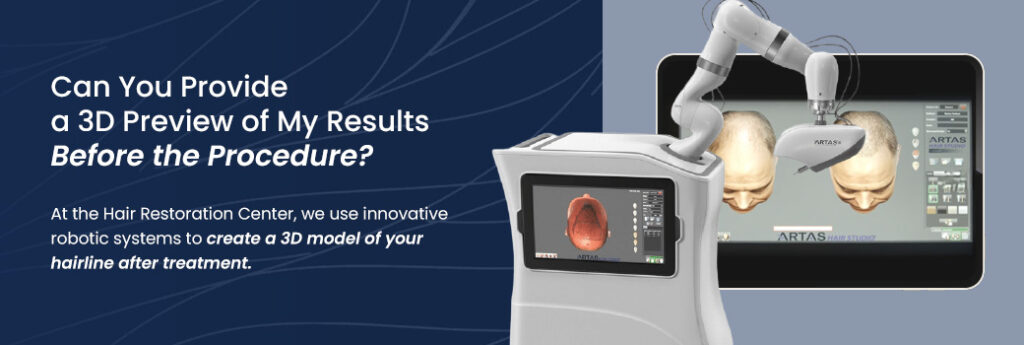
3D modeling can give you an accurate visualization of your expected outcome before you commit to treatment. At the Hair Restoration Center, we use innovative robotic systems to create a 3D model of your hairline after treatment.
Dr. Chen will use this technology to design a look that suits your age and facial features. However, this is a collaborative approach, as he’ll work with you to reach a realistic endpoint that you love. Dr. Chen will use the 3D model as a reference throughout your treatment to enhance consistency and accuracy.
Patient Outcomes
Understanding what outcomes you can expect from your transplant helps you set achievable goals and evaluate whether a clinic is right for you.
What Results Can I Realistically Expect?
A reputable clinic never overpromises and is honest about what you can achieve based on your unique situation. During your initial consultation, your physician should assess your hair loss stage using the Hamilton-Norwood scale and determine whether you have a sufficient donor hair supply. With a thorough assessment, they can create an accurate hairline design so you’ll know what to expect before moving forward with treatment.
Can You Show Before-and-After Results From Real Patients?
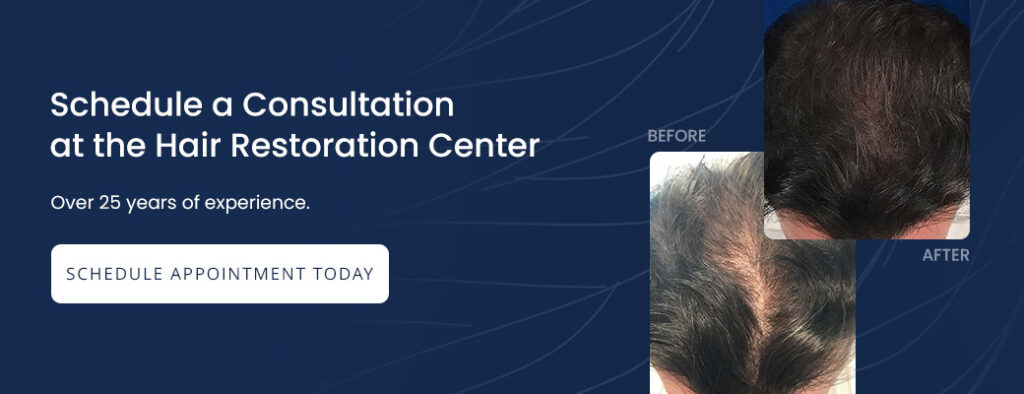
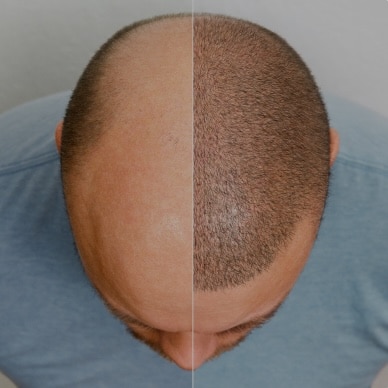
While any clinic can make bold claims about its work, before-and-after photos from real patients show verifiable evidence. Photos also reveal the surgeon’s eye for authentic hairline design and their ability to create outcomes that blend seamlessly with your existing hair.
Financing
You should leave your initial consultation with a specific idea of your treatment costs and financing options. Here’s what to verify.
How Much Does a Hair Transplant Cost?
The cost of a hair transplant varies based on the number of grafts you will need to achieve your goals. The clinic’s location is another factor affecting costs. If you travel to receive treatment, you might need to pay for flights and accommodation.
Some patients choose to undergo procedures abroad to save on costs. If you’re considering this option, look up the treatments offered by foreign clinics and the medical standards they must adhere to.
While it may be more expensive to get treatment locally, the U.S. has some of the strictest regulations for clinics and surgeons. A well-performed transplant can deliver long-lasting, authentic results that make the investment worthwhile.
Do You Offer Financing Options?
Leading clinics, including the Hair Restoration Center, partner with financial institutions to put the cost of hair restoration within reach for more people. We offer flexible solutions through Cherry so you can spread out the cost of your treatment in installments. During your consultation, we’ll walk you through how this works and provide the details you need to make decisions with less financial stress.
Recovery and Post-Procedure Support
Be sure to ask about your recovery timeline and aftercare routines for optimal results.
What Does the Recovery Process Look Like?
Hair transplants are outpatient treatments. While everyone heals from this surgery at slightly different rates, here’s a general idea of what you can expect during recovery.
- Two to four weeks: The transplanted hair will generally start to shed during this period. Don’t panic — this is a normal part of the process and doesn’t mean your transplant has failed.
- Three to four months: A dormant phase will follow, with new hair growth beginning around the three-month mark.
- Nine months to one year: As your results continue improving, your new hair will thicken and blend fully with your existing hair.
What Follow-Up Care Do You Provide After My Procedure?
Proper aftercare is crucial for long-term transplant success. Your specialist should provide detailed instructions, including when and how to start washing your hair to protect the newly transplanted grafts.
You must attend all scheduled follow-up appointments to monitor the donor and recipient areas. These sessions confirm your healing is progressing as expected and give you the chance to address concerns that may arise during your recovery.
Schedule a Consultation at the Hair Restoration Center
Now that you know what questions to ask when selecting your Bay Area hair transplant specialist, you can confidently book an appointment. Dr. Chen provides free consultations in Northern California. He’s happy to answer all your questions while offering a customized treatment plan designed to meet your goals.
With over 25 years of experience, we’ve helped countless clients restore their confidence with authentic-looking results. At our ARTAS clinic in the Bay Area, we use innovative robotic systems and a personalized approach to provide you with the highest level of care throughout every phase of your hair restoration. We also offer NeoGraft and FUT treatments. Schedule your appointment today and look forward to regaining a fuller head of hair.